You know you should keep a gratitude journal. You bought the beautiful notebook and set it carefully on your nightstand. But at the end of a long day, staring at a blank page feels less like a mindful ritual and more like a homework assignment.
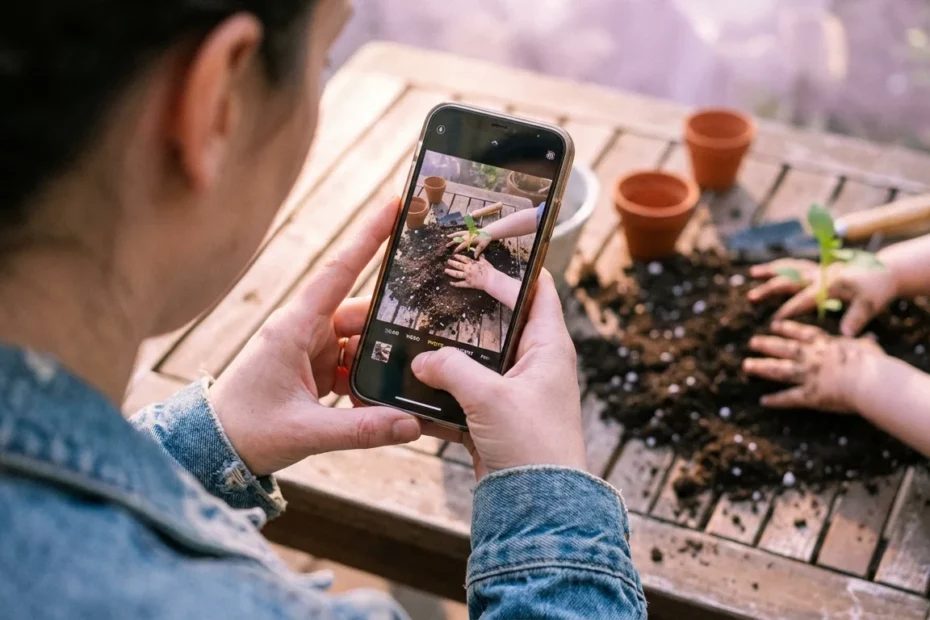
You can get the mental health benefits of a gratitude practice without writing a single word. By using a private photo journaling app, you can capture the reality of your life instead of a curated performance. You just need your smartphone camera and a willingness to notice the messy, beautiful reality right in front of you.
Join daily journalers in 163+ countries who have captured 50M+ photos.
- Why do traditional gratitude journals fail?
- How do you start a visual gratitude practice?
- What are the best visual gratitude journal prompts?
- How do you turn these prompts into a lasting habit?
- Frequently Asked Questions
Why do traditional gratitude journals fail?
Traditional gratitude journals fail because writing requires significant cognitive effort at the end of a tiring day. The pressure to fill a blank page turns a mindful ritual into a chore. This leads to habit abandonment, guilt, and the loss of long-term mental health benefits.
Dr. Robert Emmons, a leading gratitude researcher, found in a 2003 study that keeping a gratitude journal can increase happiness by 25 percent and improve sleep. The science is clear. The problem is the delivery method.
Many aspiring journalers abandon the practice because of blank page syndrome. We are already exhausted by the time we sit down to reflect. Writing full sentences feels heavy. A visual journal removes this friction entirely by replacing the pen with a camera lens.
How do you start a visual gratitude practice?
You start a visual gratitude practice by taking one photo a day of something you appreciate. No writing is required. You simply use your smartphone camera to pause, notice your surroundings, and capture a real moment without staging or filtering the image.
Taking a photo actually increases your enjoyment of experiences. A 2016 study in the Journal of Personality and Social Psychology found that photography forces you to engage more deeply with the visual details of your environment. It turns passive observation into active appreciation.
“PYM to me is almost therapeutic,” shares one daily journaler in a recent survey. “A useful reminder to look around me and outside of me to find out that life is still interesting and worthwhile, after all.”
What are the best visual gratitude journal prompts?
The best visual gratitude journal prompts focus on ordinary, unpolished moments rather than aesthetic highlights. Good prompts guide you to notice morning light, messy workspaces, comforting objects, and daily routines. These categories help you capture the reality of your life instead of a curated performance.
Morning Prompts: Finding focus
Morning prompts help you start the day with intentional observation. They encourage you to notice the quiet routines and small comforts that happen before the rush of the day begins. This sets a positive baseline for your mental health before checking your phone or emails.
- The mug that holds your morning coffee or tea.
- The exact outfit you pulled out of the closet today.
- The morning light hitting a mundane object in your home.
- Something keeping you warm (a pet, a blanket, a sweater).
- The view out of the very first window you look through.
- Your breakfast, exactly as it looks before your first bite.
- The shoes waiting by the door for your commute.
- A reflection of yourself in a mirror or glass surface.
- The weather outside, captured in a single detail like a puddle or shadow.
- Your keys or bag resting on the counter.
Midday Prompts: The messy middle
Midday prompts shift your attention to the chaotic but productive parts of your day. They train your brain to find appreciation in work tools, half-eaten meals, and brief moments of rest. These visual pauses interrupt the stress cycle and bring you back to the present moment.
- A tool you use for work that makes your life easier.
- Your current view, even if it is just a laptop screen or a steering wheel.
- Evidence of a meal you enjoyed (an empty plate, a crumpled napkin).
- A text message that made you smile (take a screenshot).
- A plant or piece of nature you passed by on an errand.
- The beverage getting you through the afternoon slump.
- A piece of mail or a package you were happy to receive.
- Your hands resting on your desk or steering wheel.
- A colleague, friend, or pet who kept you company.
- The messiest corner of your workspace that proves you are getting things done.
Evening Prompts: Unwinding and reflection
Evening prompts serve as a visual wind-down routine. They focus on the relief of finishing tasks, the comfort of your home, and the objects that help you transition into rest. Capturing these moments signals to your brain that the workday is officially over.
- The shoes you took off at the end of the day.
- Whatever is currently sitting on your nightstand.
- The sky outside your window right now as the sun sets.
- Something you are glad you do not have to do until tomorrow.
- The book or screen you are using to unwind.
- Your dinner ingredients resting on the cutting board.
- The lighting in your living room.
- A chore you finally finished (folded laundry, empty sink).
- The pajamas or comfortable clothes you changed into.
- Your bed, unmade or made, waiting for you to sleep.
How do you turn these prompts into a lasting habit?
You turn these prompts into a lasting habit by removing all friction and expectations. Commit to just seven seconds a day to take one photo. Let go of perfection, embrace blurry or mundane images, and use a private tool that reminds you to pause.
Spring is the season of fresh starts. It is the perfect time to build a new mindfulness habit. But before you add a massive journaling routine to your endless to-do list, remember that consistency beats intensity.
Rated 4.5 stars on the App Store. Start journaling in 60 seconds.
When you capture one real photo a day, the habit builds itself. “I love that a photo book forms throughout the year with almost no effort from me,” notes an App Store review from a 12-year daily journaler in the Netherlands.
Frequently Asked Questions
Do I need to write captions for my photos?
No, you do not need to write captions. The photo itself serves as the memory and the gratitude practice. If you want to add a short note for context, you can, but the visual record is entirely sufficient on its own.
Can I use these prompts if I miss a few days?
Yes, missing days is completely normal. A healthy habit allows for imperfection. If you miss a day, simply pick a new prompt and start again tomorrow without feeling guilty about breaking a streak.
Is a photo journal as effective as a written journal?
Yes, a photo journal can be just as effective for mindfulness. Taking a photo forces you to pause, observe your surroundings, and find something worth capturing. This active noticing provides the same mental health benefits as writing down your thoughts.
Start your visual gratitude practice today
You do not need more perfect photos. You need the real ones. Turn your daily moments into a private collection that actually means something to you. Social media turned photos into performance, but a visual gratitude journal turns them back into memories.
“I love this app. I really appreciate when it pops up in my day and reminds me to look at what is right here around me.”
App Store review, GB
50M+ photos captured by users who report 8 to 12+ years of continuous daily use.
Related reading: